
Achieve Your Dream SAT Score with Expert Online Prep
Boost your scores & Achieve 1550+ in SAT with PrepGenius’s proven SAT preparation courses

Boost your scores & Achieve 1550+ in SAT with PrepGenius’s proven SAT preparation courses








At PrepGenius, we understand that the SAT is more than just a test, it’s your gateway to top universities and scholarship opportunities. Our comprehensive online SAT Prep courses, led by world-class tutors, are curated to help students across the USA, achieve their target scores from the comfort of their home.
What helps us stand out?
Premium | Standard | Fast-Track | Focused | Flexi | Combo
Leverage our Expertise for Your SAT Success!






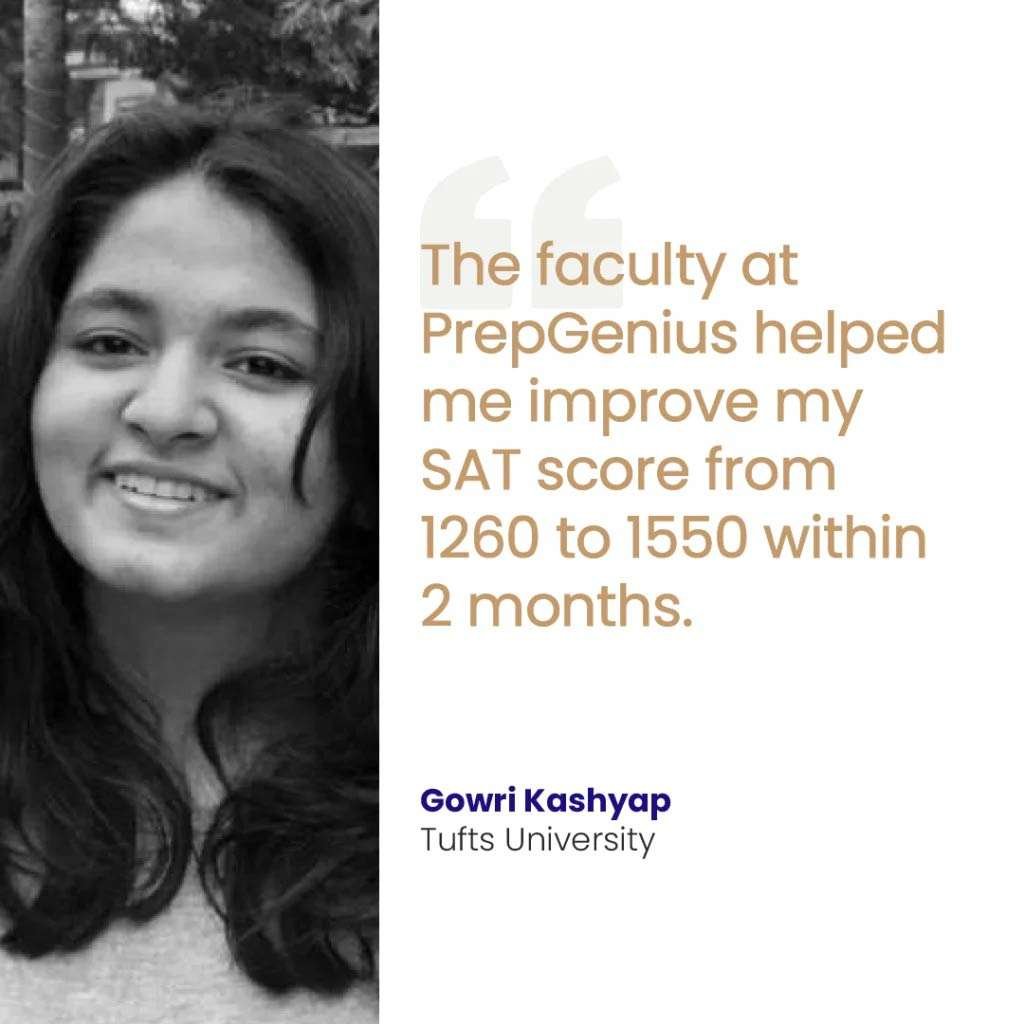
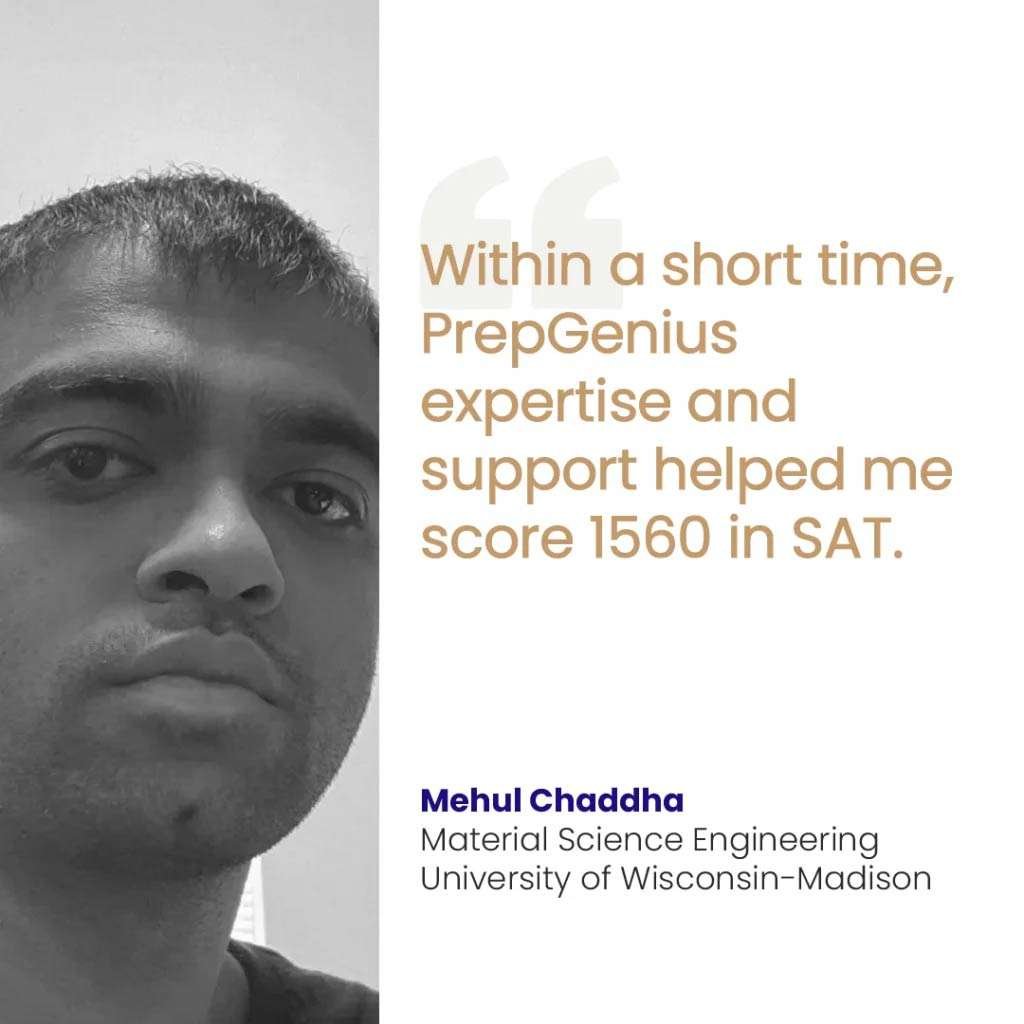
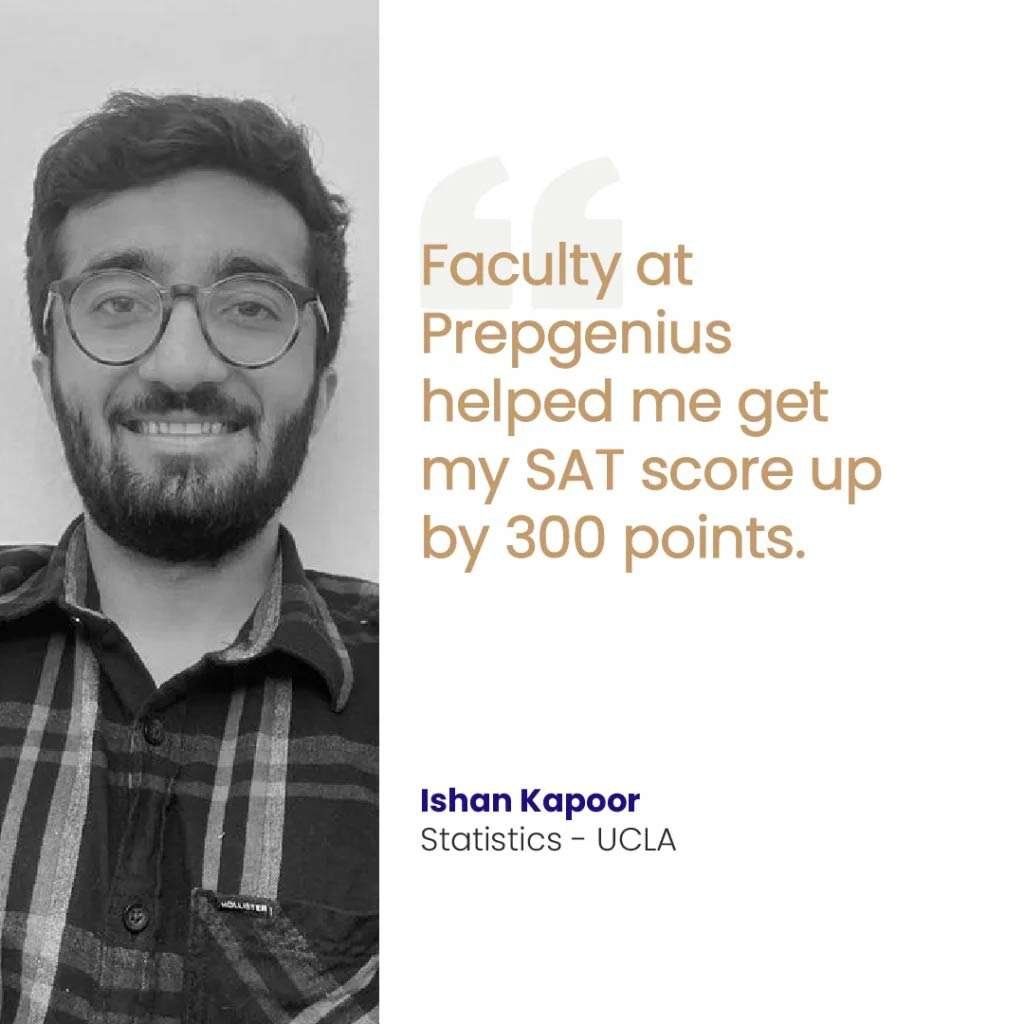
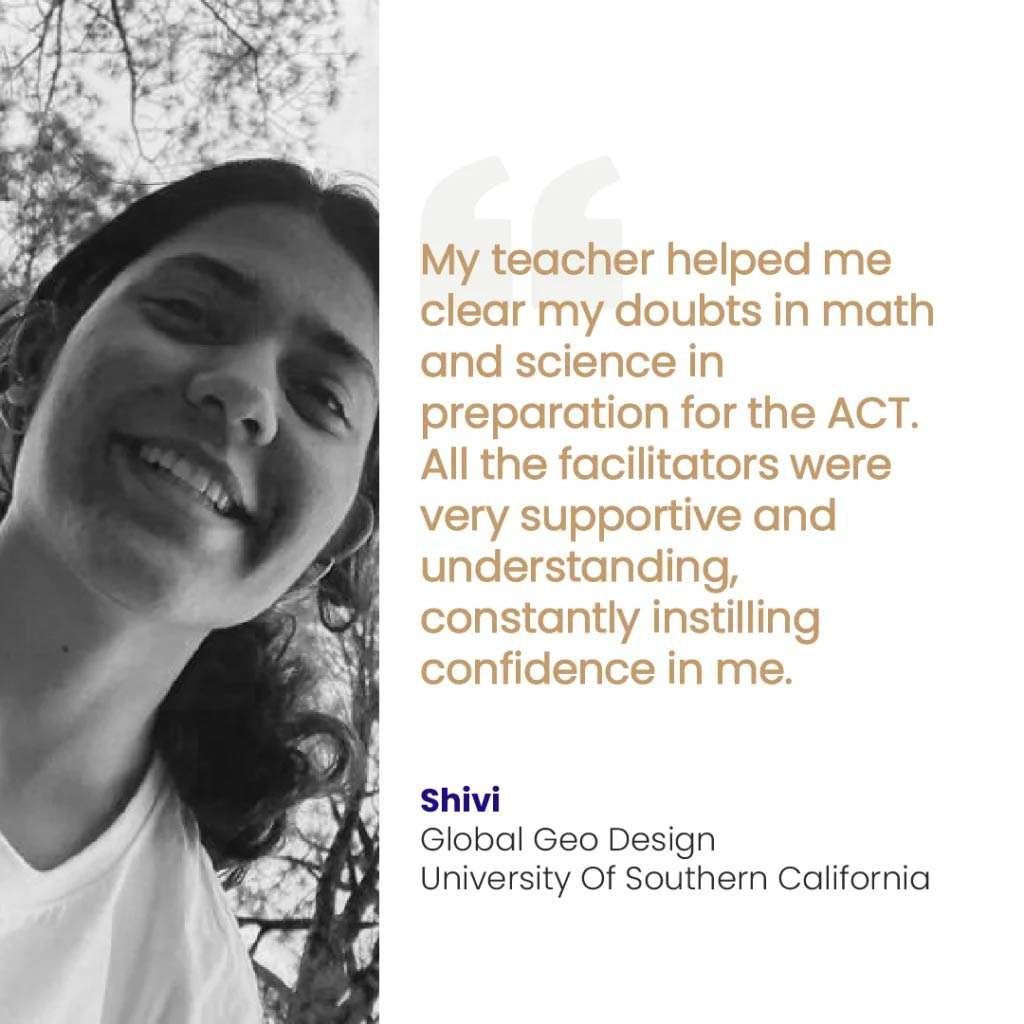
Enroll in our expert tutor-led Online SAT Exam Preparation Course
A digital SAT refers to the computer-based version of the Scholastic Assessment Test (SAT), a standardized test widely used for college admissions to undergraduate programs in various universities and colleges in countries such as the US, Canada, UK, Australia, Germany, Singapore, Netherlands, India etc. Digital SAT is administered by the College Board and is designed to measure a student’s readiness for college by assessing their skills in Critical Reading, Writing, and Mathematics.
The SAT score is broken up into two halves: The Reading and Writing modules are scored between 200-800 points. The Math modules are scored between 200-800 points. The total SAT score is therefore between 400-1600 points, with a 1600 being a perfect score, and a 1100 being approximately an average score. There is no penalty for guessing, so be sure to answer every question, including student produced response questions on the math modules
There is not a “passing” score on the SAT—a good score for you depends on your specific goals for college admissions. Check out the College Board website for detailed information on typical scores for admitted students at schools throughout the United States.
The test will be shorter, around 2 hours 14 min, with fewer questions. It becomes adaptive, adjusting difficulty based on your performance. Reading and Writing will combine into one module with shorter passages. The "no calculator" section is eliminated, and a built-in Desmos calculator is provided. Math questions will be less wordy, and students can still use their approved calculators. For more information on the differences between Digital SAT and Paper SAT please refer to this link
Students approved for this accommodation will receive a test with twice the time of regularly scheduled breaks and extra breaks applied. Students approved for a braille accommodation will test digitally using their own refreshable braille display or screen reader.
(i) Start with a full-length practice test: This test will help you ascertain your current level of understanding of SAT topics. Moreover, it will assist you in identifying your weak and strong areas.
(ii) Concept building for weak areas: Begin working on your weak areas and build a strong foundation with concrete concepts & understanding of the topics.
(iii) Regular revision: Do regularly revise your learned concepts so that you can retain them while attempting the real test. Also, keep in touch with your strong areas & topics, and don't neglect them by being overconfident about them.
(iv) Ample practice: Give multiple topic-wise practice tests to further strengthen the concepts.
(v) Attempt Full-length tests: Do practice with at least 8-10 full-length tests which will further help you in refining your concepts, and give you opportunities to practice over a variety of questions in a time-bound manner.
The weight placed on SAT scores varies from school to school. Colleges and universities also consider high school grade point average and academic transcript, letters of recommendation, interviews and personal essays when deciding on admissions. For more specific information about the weight of your scores, contact the admissions offices of the schools to which you will apply. For more information on benefits of SAT scores please refer to this link.
Check out our blog for more information:
Students commonly take the SAT in Grade 10 & Grade 11, and often again in the beginning of Grade 12.
You can take the SAT as many times as you want, but we recommend that you take it at least 2 times, and no more than 3 or 4 times.
Yes, you should prepare for the SAT. Everyone has the ability to improve their knowledge, and you want your SAT score to match your potential so that you can get into the best possible schools. Start preparing for the SAT any time after Grade 9 exams. Summer is a great time to start because you will actually have time to prepare. Try to begin your preparations ahead of time – don’t leave it to the last minute.
Calculators are allowed throughout the entire Math section. Desmos (Graphing) calculator is integrated into the digital test experience so that all students have access. Along with this, students can also carry any of the allowed calculators on the test day with them.

In 2012, our journey began with RoboGenius with a focus on STEM, LEGO Education, and robotics Education, nurturing young minds. Adapting to the changing needs of students, we now provide test preparation, profile building, and academic tutoring, establishing ourselves as leading test prep consultants.
Email Us: info@prepgenius.in
Call Us: +91 9958590957